 Get full access to premium PowerPoint templates at a limited-time price.Get Now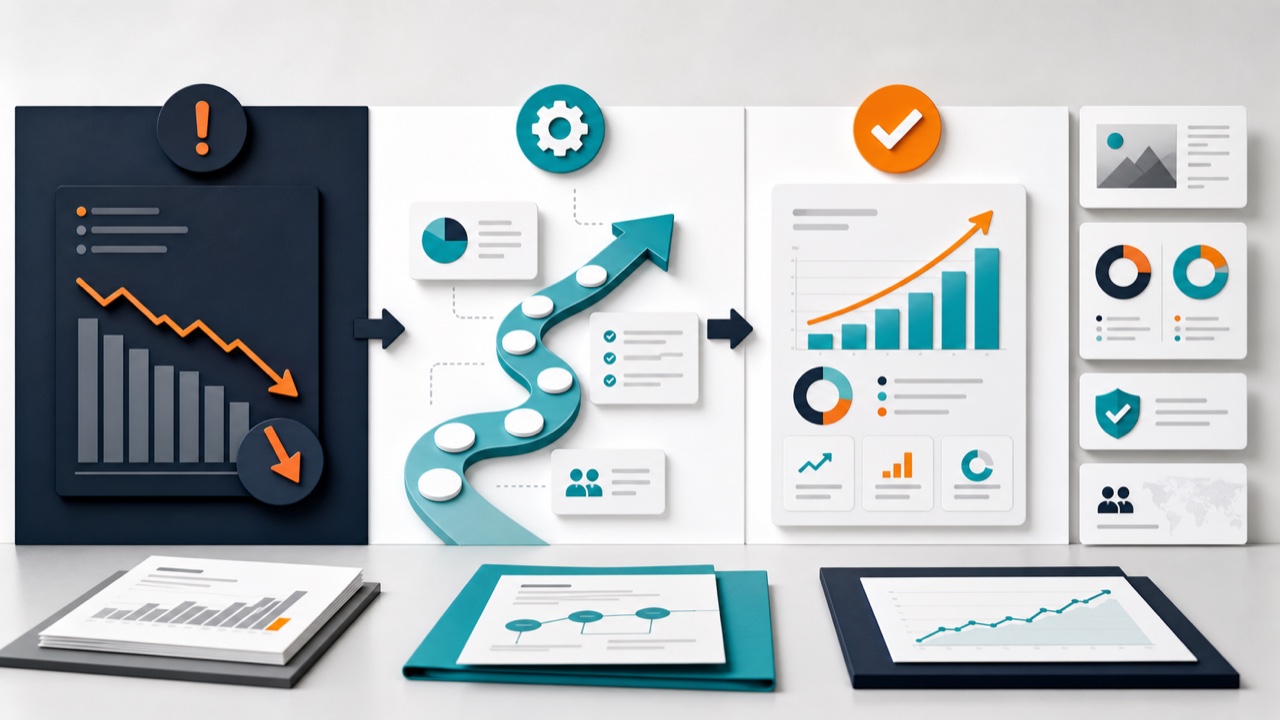
A client case study presentation should show a credible chain from the customer's initial problem to the work performed and the measured result. Start with the problem, not a long company history. Use evidence, acknowledge the client's contribution, and quantify outcomes with a timeframe and baseline wherever possible.
A strong case study answers six questions:
The presentation should not read like an advertisement. Claims become convincing when the audience can inspect the starting point, intervention, evidence, and limitations.
Open with the measurable result and the customer context. For example: “Regional distributor reduced order-processing time by 31% in six months.” Do not reveal confidential data without approval.
Explain the industry, scale, customer type, operating environment, and relevant constraints. Keep company history to the minimum needed to understand the problem.
State the problem specifically. Replace “needed greater efficiency” with the observable issue, such as error rate, cycle time, conversion loss, cost, or customer impact.
Show the starting metrics, process, customer feedback, or operational symptoms. Include the period and data source.
Explain the important causes and how they were identified. Separate evidence from assumptions.
Describe the intervention, scope, phases, responsibilities, and rationale. A process diagram or timeline is usually more useful than a list of service features.
Show what changed, who participated, and how obstacles were handled. Give appropriate credit to the client's internal team.
Compare the baseline with the outcome using the same definitions and timeframe. Include both positive results and relevant limitations.
Summarize what made the result possible, what the client plans next, and what a similar organization should evaluate before applying the approach.
Use a specific metric, baseline, result, and period. For example:
Avoid unsupported words such as “dramatic,” “transformational,” or “significant.” If attribution is uncertain, state the contribution rather than claiming sole causation.
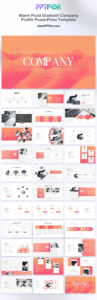
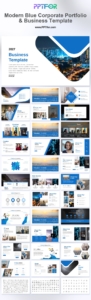
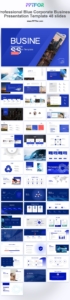
The Warm Fluid Gradient Company Profile PowerPoint Template supports customer context and proof slides. The Blue Corporate Portfolio & Business Template works for portfolio stories, and the Blue Corporate Business Presentation provides a broad corporate layout library.
Choose layouts that make comparisons, timelines, metrics, and customer quotations easy to verify. Decorative pages are less important than evidence structure.
The audience first needs to understand the client's problem and stakes. Introduce your organization when the role and solution become relevant.
“Improved performance” is a claim, not a result. Add the measure, baseline, outcome, and timeframe.
Results without an approach are difficult to trust or learn from. Show the key choices and implementation steps.
Most outcomes result from several factors. Explain your contribution and acknowledge the client's people, decisions, and market conditions.
Keep the main story focused and move technical evidence, screenshots, and detailed process maps to an appendix.
Agree on the intended audience, distribution channels, named results, quotations, logo use, and review owner before designing the final deck. Send the client the exact wording and visuals that will be published. Approval of an interview or raw data does not automatically mean approval of a public marketing claim.
Keep a source record for each result, including the baseline, measurement period, calculation owner, and known limitations. If the result changes after the project, preserve the original reporting date. A case study is more credible when readers can see precisely what was measured and when.
Create separate public and sales-enablement versions when confidential implementation detail is useful to qualified buyers but unsuitable for a public resource.
For a reusable corporate narrative, see the Company Profile PowerPoint Template guide. For evidence-led slide design, use How to Build a Professional Business Report Presentation.
A focused case study can often be told in 6 to 10 main slides. Put detailed methodology, screenshots, and supporting data in an appendix.
Use an approved anonymous description based on industry, size, and context. Remove details that could identify the organization indirectly.
Yes, when it is clearly attributed and not presented as a measured financial result. Combine customer testimony with operational data where possible.
Lead with the outcome and relevant customer context. This establishes why the story matters before explaining the process.
Get full access to our entire collection of premium PPT templates for one simple price.
Forget about complex tools or technical skills—just choose, edit, and download.