 Get full access to premium PowerPoint templates at a limited-time price.Get Now
A board meeting presentation should help directors understand performance, challenge assumptions, and make decisions. It should not reproduce every operating report. Lead with the issues that affect strategy, cash, risk, and governance, then provide detailed evidence in the pre-read or appendix.
An executive report may inform leadership about operations. A board deck must also support oversight and formal decisions. Directors need enough context to test management's view without spending the meeting reading slides.
A strong board presentation:
List the decisions, approvals, and strategic discussions required. Routine information can remain in the pre-read.
Summarize company performance, material changes, and management's current view. Focus on what directors need to understand before discussing detail.
Show a stable set of strategic and operating KPIs with target, actual, trend, and commentary. Avoid changing the scorecard whenever a metric becomes uncomfortable.
Present revenue, margin, operating expense, cash, and other critical financial measures. Reconcile actual results with the approved plan.
Show the current forecast, major assumptions, and changes from the previous forecast. Include downside implications where uncertainty is material.
Explain customer acquisition, retention, pipeline, concentration, pricing, or market changes that affect the plan.
Report strategic milestones, quality, capacity, and material delays. Connect activity to customer and financial outcomes.
Cover leadership changes, critical hiring, succession, capacity, engagement, or organization risks relevant to the board's role.
Show progress against the agreed strategy. Highlight tradeoffs and changes rather than presenting a generic roadmap.
Prioritize material commercial, financial, operational, legal, security, and people risks. Include likelihood, impact, trend, owner, and response.
For each decision, state the question, recommendation, alternatives, evidence, financial implication, key risks, and requested resolution.
Record decisions, owners, deadlines, and any information required before the next meeting.
Send the detailed pre-read early enough for review. The live deck should guide discussion rather than repeat every paragraph.
Use the pre-read for:
Use the meeting slides for conclusions, exceptions, choices, and decisions.
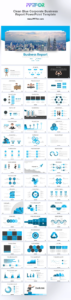
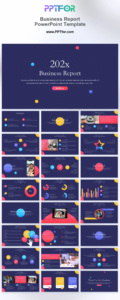
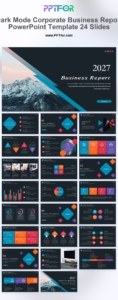
The Clean Blue Corporate Business Report PowerPoint Template provides concise reporting layouts. The Business Report PowerPoint Template supports recurring business reviews, while the Dark Mode Business Report PPT Template offers an alternative executive visual system.
Choose one visual system and keep it stable across meetings. Familiarity helps directors scan for changes instead of relearning the layout.
Use four parts:
Avoid phrases such as “timing issue” or “market conditions” without evidence. State the affected amount, period, assumption, and response.
Assign each agenda item an owner, intended outcome, and time allocation. Ask directors to submit factual clarification questions before the meeting so live time can focus on judgment and tradeoffs. When a topic requires a decision, circulate the recommendation and alternatives in advance rather than revealing them during the discussion.
After the meeting, preserve the approved deck, final decision papers, and action record as governance evidence. Update owners and dates without rewriting the history of what the board saw. A controlled archive also makes it easier to compare forecast changes, risk judgments, and commitments across meetings.
Sensitive board information requires appropriate access control. Confirm distribution lists, link permissions, downloaded copies, and the handling of confidential appendices before sending the pre-read.
For executive summary design, see the Executive Report PowerPoint Template guide. For KPI pages, use the KPI Dashboard PowerPoint guide.
The appropriate length depends on the agenda, but the main discussion deck should remain focused. Many teams use 10 to 20 main slides plus appendices and separate decision papers.
Follow the board's agreed governance timetable. The practical goal is to give directors enough time to review detail and submit clarification questions before the meeting.
Only when the department's performance affects strategy, risk, cash, or a board decision. Functional completeness is less important than decision relevance.
State the decision, management recommendation, alternatives, evidence, financial impact, key risks, and exact approval or guidance requested.
Get full access to our entire collection of premium PPT templates for one simple price.
Forget about complex tools or technical skills—just choose, edit, and download.