 Get full access to premium PowerPoint templates at a limited-time price.Get Now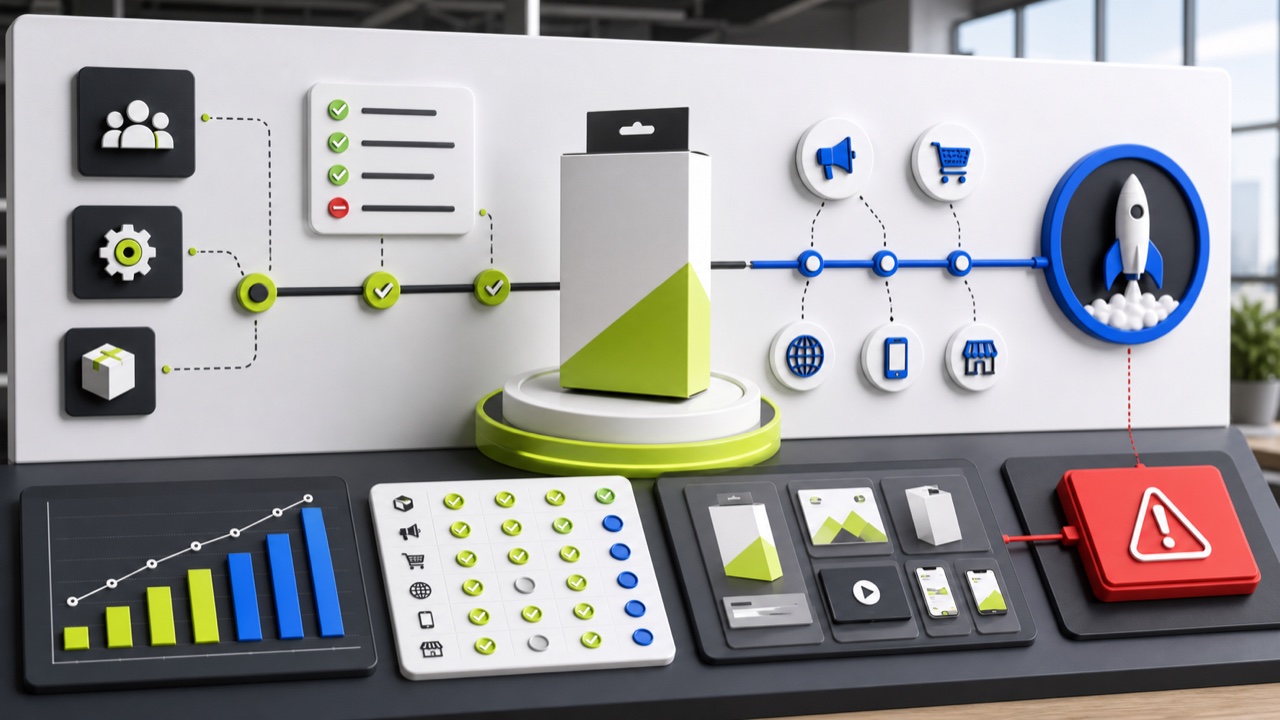
A product launch presentation should align product, marketing, sales, customer success, and operations around one launch plan. It must explain the audience, positioning, goals, readiness, channels, timeline, owners, risks, and measurement. A collection of promotional mockups is not a launch strategy.
Before execution, every team should understand:
State the product, target launch date, audience, objective, and current readiness. Include the decision or alignment required from the meeting.
Show the customer need, evidence, and consequence. Distinguish the user's problem from the product feature.
Define priority segments, buyer roles, use cases, and exclusions. A launch aimed at everyone is difficult to position and measure.
Explain the core capability, customer experience, launch version, and items deferred to later releases.
State the category, audience, value, differentiation, and proof. Translate internal feature language into customer outcomes.
Summarize alternatives, competitor behavior, and market conditions that affect timing or message. Use evidence rather than broad claims.
Map owned, earned, paid, partner, sales, and customer channels to the audience journey. Assign the role of each channel.
List the required assets, messages, production status, review owner, and publication date. Separate launch-critical content from optional material.
Show preparation, internal enablement, release, promotion, and post-launch optimization. Identify dependencies and approval gates.
Track product, support, sales, marketing, legal, analytics, and operations readiness with concise status and exception notes.
Define awareness, acquisition, activation, adoption, revenue, retention, or operational metrics appropriate to the launch. Include sources and review cadence.
List the highest-impact risks, contingency plans, owners, and immediate actions. Confirm who has authority to delay or modify the launch.
Use the Marketing Timeline PowerPoint Templates for campaign sequencing, the Project Management PowerPoint Template for ownership and readiness, and the Modern Corporate Strategy Presentation Template for strategic context and execution.
Select layouts according to the operating need. The best launch deck may combine timeline, project dashboard, audience, message, and KPI pages from a coherent template system.
A product roadmap explains product direction, priorities, and releases over time. A launch presentation coordinates the go-to-market work required to introduce a specific release or offer.
The roadmap answers “what are we building and why?” The launch deck answers “how will this release reach the right audience successfully?” Link them, but do not replace one with the other.
For roadmap structure, read the Product Roadmap PowerPoint Template guide. For campaign measurement, use the Marketing Report PowerPoint Template guide.
Hold the readiness review early enough to change the plan, not only confirm it. Ask each owner to provide evidence for the reported status: completed testing, approved copy, trained support staff, configured analytics, stocked inventory, or signed partner commitments. A green label without evidence is not a readiness assessment.
Define launch gates and the person authorized to approve an exception. Examples include product quality thresholds, legal approval, support coverage, tracking validation, and rollback capability. Record unresolved items with owners and deadlines.
After launch, schedule a short operational check and a later performance review. The first confirms stability and customer response; the second evaluates adoption, commercial outcomes, lessons, and changes to the next release plan.
A cross-functional planning deck often needs 10 to 15 main slides. Keep detailed channel calendars, technical checklists, and asset inventories in appendices or operating tools.
Ownership varies, but one accountable launch lead should maintain the current version while functional owners verify their sections and commitments.
Choose metrics across reach, acquisition, activation, adoption, revenue, retention, and operational quality according to the product and objective.
Create it early enough to align scope, audience, dependencies, and measurement before production is locked. Update it as readiness and risk change.
Get full access to our entire collection of premium PPT templates for one simple price.
Forget about complex tools or technical skills—just choose, edit, and download.