 Get full access to premium PowerPoint templates at a limited-time price.Get Now
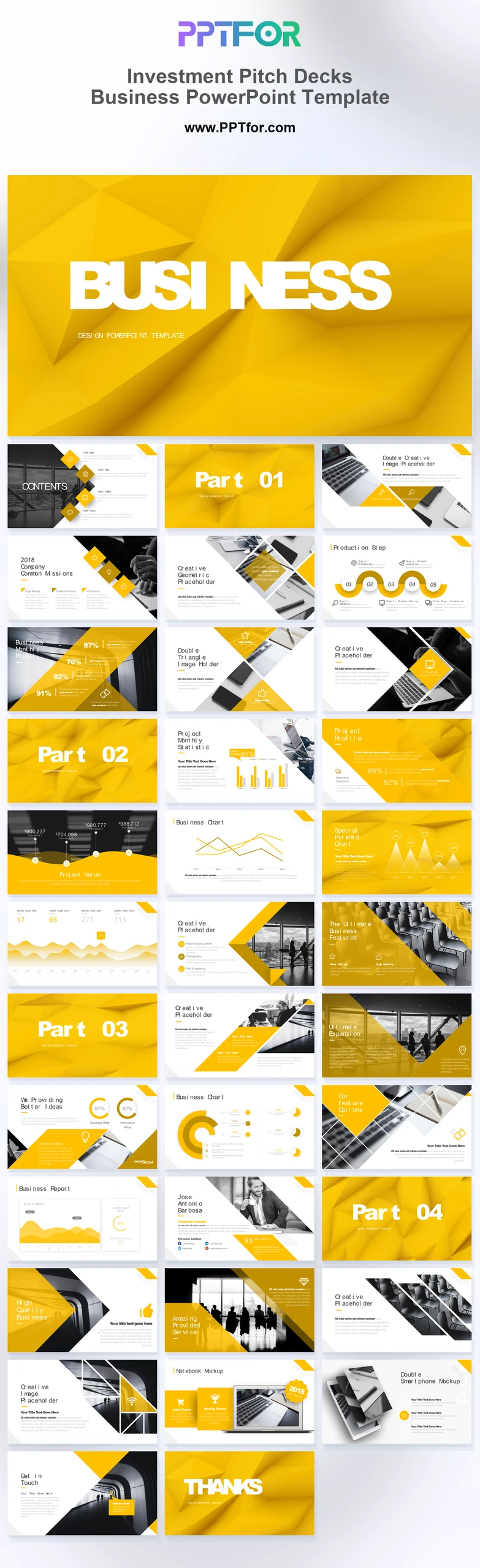
A successful investor presentation is rarely about using more slides. It is usually about making the business easier to understand, easier to trust, and easier to discuss. This example shows how a startup team used an Investment Pitch Decks Business PowerPoint Template to turn a scattered fundraising presentation into a clearer investor conversation.
The goal was not to make the deck look decorative. The goal was to help investors quickly understand the problem, solution, market opportunity, business model, traction, financial plan, and funding ask without getting lost between slides.
An investment pitch deck template can help a startup deliver a stronger presentation by giving the founder a ready-made structure for the story. Instead of building every slide from zero, the team can focus on sharpening the message, showing evidence, and guiding investors through the business case step by step.
Before using a template, the startup had useful information, but the presentation did not flow well. The market slide felt disconnected from the product slide. The traction slide included numbers but did not explain why they mattered. The financial slide looked dense, and the final funding ask appeared too suddenly.
This is a common problem in early investor presentations. Founders often know the business deeply, but investors are seeing the company for the first time. A pitch deck needs to translate internal knowledge into a simple external story.
The team chose the Investment Pitch Decks Business PowerPoint Template because it already included presentation sections commonly needed in investor meetings: business overview, problem and solution, market opportunity, product explanation, traction, revenue model, team, financials, and call-to-action slides.
This gave the founder a practical starting point. Instead of asking, “What should the next slide be?” the team could ask a better question: “What does an investor need to believe after seeing this slide?”
The strongest result came from treating the template as a strategy tool, not just a design file. The team customized each slide around one clear message.
The biggest improvement was clarity. The updated deck helped the founder present the company as a structured opportunity instead of a collection of disconnected facts.
| Before Using the Template | After Using the Template |
|---|---|
| Slides were visually inconsistent. | The deck used a consistent layout, typography, and visual hierarchy. |
| The business story jumped between topics. | The presentation followed a clear investor-ready sequence. |
| Traction metrics appeared without context. | Metrics were connected to growth, demand, and future potential. |
| The financial slide looked too crowded. | Financial assumptions were simplified for faster review. |
| The funding ask felt abrupt. | The ask was tied to milestones, hiring, product development, and growth plans. |
The revised presentation worked better because it respected how investors review early-stage opportunities. Investors do not only look for a good product. They look for a clear market, a focused team, early proof, a believable growth path, and a reason to continue the conversation.
The template helped the team separate the pitch into digestible sections. The founder could explain the business with more confidence because the deck supported the conversation instead of forcing the audience to work too hard.
The problem slide was rewritten to describe a specific customer pain point. The solution slide then explained how the product solved that pain in a direct and visual way.
Instead of adding a large market number without explanation, the team clarified the target segment, use case, and why the timing mattered.
The traction slide became one of the most important parts of the deck. It highlighted user activity, customer feedback, early revenue signals, or product adoption patterns in a format investors could scan quickly.
The financial section was simplified into core assumptions, expected growth, and funding use. The ask slide became more specific, which made the investor discussion more practical.
An investment pitch deck template is especially useful when a founder has strong business information but needs help turning it into a polished investor presentation. It is also useful when the team is preparing for seed meetings, business plan reviews, accelerator interviews, partner discussions, or internal fundraising rehearsals.
If you need more styles for early-stage fundraising, business planning, or startup storytelling, browse the full Startup & Pitch Decks PowerPoint Templates category.
To improve the strategy behind your investor presentation, you may also want to read these related guides:
A pitch deck template does not replace the business strategy behind a startup. But it can make the strategy easier to present. In this example, the investment pitch deck template helped the founder create a more focused investor meeting by organizing the message, improving slide clarity, and making the funding story easier to follow.
For founders preparing an investor presentation, the best deck is not simply the most beautiful one. It is the deck that helps investors understand the opportunity quickly and ask better follow-up questions.
Yes. An investment pitch deck template can improve a startup presentation by giving the founder a clear structure for the business story, market opportunity, traction, financial plan, and funding ask. The template does not guarantee investment, but it can make the presentation easier for investors to understand.
An investment pitch deck usually includes the problem, solution, market opportunity, product, business model, traction, competitive advantage, team, financials, funding ask, and next steps. The exact slide order depends on the company stage and investor audience.
No. A PowerPoint template provides structure and design, but the founder still needs strong content, credible assumptions, clear metrics, and a persuasive business story. The best results come from combining a professional template with specific company evidence.
Most investor pitch decks work best with 10 to 15 core slides for a first meeting. Extra slides can be kept in an appendix for financial details, product screenshots, market research, or technical explanations.
You can browse more investor-ready designs in the Startup & Pitch Decks PowerPoint Templates category, including templates for fundraising, business planning, startup storytelling, and investor presentations.

Get full access to our entire collection of premium PPT templates for one simple price.
Forget about complex tools or technical skills—just choose, edit, and download.