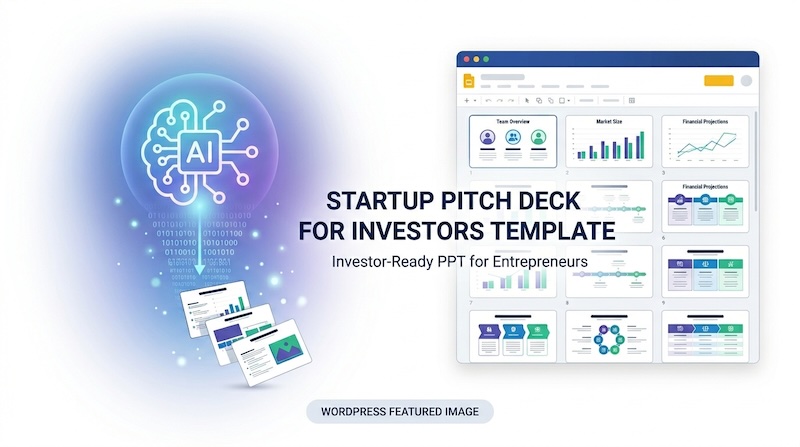
A startup pitch deck for investors template gives founders a clear structure to explain their idea, traction, and business model in front of angels and VCs. The problem is that many founders only replace the placeholder text and ignore what investors actually expect to see on each slide. This article walks you through how to use a template the right way so it becomes a real fundraising tool, not just a pretty document.
If you want to start from a professional layout instead of a blank slide, you can download investor-ready PPT templates from our Startup & Pitch Decks category.
What Investors Expect in a Startup Pitch Deck
When an investor opens your deck, they are not looking for design tricks. They want fast answers to a short list of questions:
- What problem are you solving and for whom?
- What is your solution and why is it better than alternatives?
- How big is the market and how quickly is it growing?
- What traction or validation do you already have?
- How do you make money and what are the unit economics?
- Who is on the team and why are you the right people?
- How much money are you raising and what will you use it for?
A good startup pitch deck for investors template should make it easy to answer these questions in 10–15 slides, with space for one main idea per slide.
Key Slides in an Investor-Ready Pitch Deck Template
Most investor-friendly templates will already contain placeholders for the following core slides. Use them intentionally instead of treating them as generic pages:
- Title & Team – your logo, one-line description, and key team members.
- Problem – the pain your target users experience, described in real-world language.
- Solution – how your product or service solves that pain.
- Market Size – how large and attractive the opportunity is.
- Product / Demo – screenshots or visuals showing what you have built.
- Traction – a few key metrics that prove progress and demand.
- Business Model – how you make money and at what margins.
- Competition – who else is in the space and how you are different.
- Team – why your founding team has an unfair advantage.
- Financials & Funding Ask – how much you want to raise and what it unlocks.
If your template is missing any of these, you can still use an extra “generic content” slide and rename it, but using an investor-focused template from the start saves time and keeps the structure tight.
Customize a Startup Pitch Deck for Different Funding Rounds
The same startup pitch deck for investors template can be used for pre-seed, seed, and even Series A, as long as you adjust what you emphasize on each slide:
- Pre-seed – emphasize the problem, solution, vision, and team; traction can be qualitative (waitlists, pilots, letters of intent).
- Seed – keep the story strong but add simple metrics for revenue, users, or retention; show early unit economics, even if rough.
- Series A – highlight growth curves, cohort behavior, and a clear plan to scale; investors will expect more detail on metrics and roadmap.
Using one flexible template for all these rounds means you do not have to redesign slides each time. You only adjust content depth and data density.
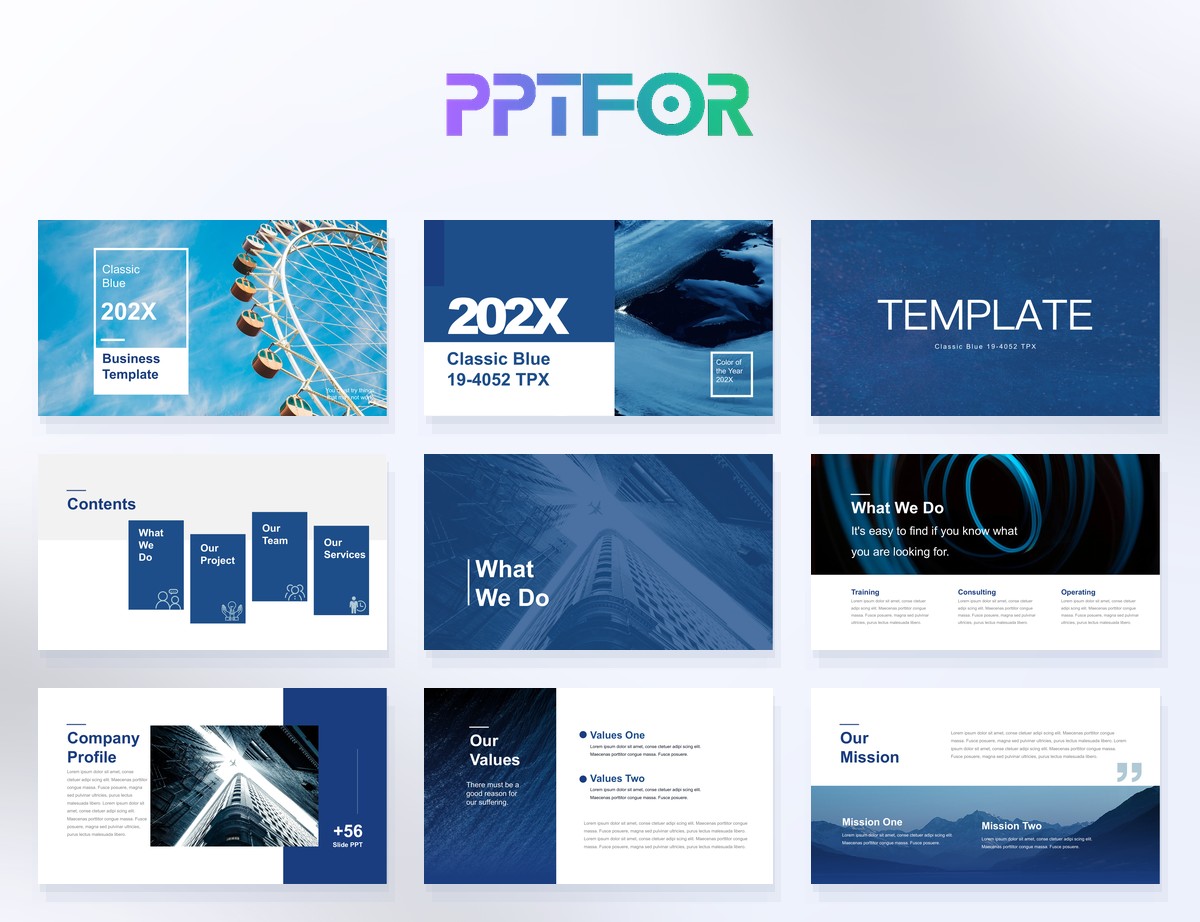
Recommended PPTFOR Startup Pitch Deck Templates
If you do not want to build everything from scratch, you can start with one of the layouts in our Startup & Pitch Decks library. For example:
- A clean, minimal pitch deck template for early-stage founders who need a 10–12 slide story.
- A metrics-driven deck with dedicated traction and financial slides for data-heavy seed and Series A companies.
- Industry-specific pitch decks for SaaS, marketplaces, mobile apps, and more that come with ready-made slide types you can rename and customize.
All of these templates are fully editable in PowerPoint, so you can change colors, fonts, icons, and chart data to match your brand in a few minutes.
Step-by-Step: How to Use a Startup Pitch Deck for Investors Template
Follow these steps to turn a pitch deck template into an investor-ready fundraising presentation and keep your main message clear and consistent.
- Pick an investor-friendly template layout – Choose a deck with clear slides for Problem, Solution, Market Size, Traction, Team, and Funding Ask, so you can focus on your story instead of redesigning from scratch.
- Customize the problem and solution slides – Replace placeholder headings and bullets with your real customer pain, product value, and proof points, making sure each slide answers one key investor question.
- Add market and competition context – Use market size, audience segment, and competitor comparison slides to show how large the opportunity is and how your startup differentiates from alternatives.
- Show traction with focused metrics – Highlight 3 to 5 metrics that prove momentum, such as monthly revenue, active users, retention rate, pilots, or partnerships, and keep each slide simple and easy to read.
- Clarify the business model and funding ask – On the business model and financial slides, explain how the startup makes money, how much funding is needed, and what milestones this round will support, in a way that ties back to your growth story.
- Review the deck for investor readiness – Remove filler slides, simplify text, check the story flow, and make sure every slide answers a real investor question before you share it with investors.
Frequently Asked Questions
How many slides should a startup pitch deck for investors have?
Most investors prefer 10–15 slides. You can use a few more if you have complex traction or financials, but each slide should focus on one main idea so people can follow the story without getting lost in details.
Do I need to design my pitch deck from scratch instead of using a template?
No. A good template gives you a proven structure and clean layout so you can spend your time on the story and numbers. As long as you customize the content for your startup and your round, investors will not mind that you used a template.
What kind of metrics should I include on the traction slide?
Choose three to five metrics that best show progress: for example, monthly recurring revenue, number of active customers, retention rate, or user growth. Use simple charts and big numbers instead of small text tables so investors can understand them in a few seconds.
Where can I download a startup pitch deck for investors template in PowerPoint?
You can download a startup pitch deck for investors template in fully editable PPT format from our Startup & Pitch Decks category, which includes layouts tailored for pre-seed, seed, and Series A fundraising.